The Rise of Agentic Workflows: How AI Is Learning to Manage Insurance Processes
For years, Artificial Intelligence in insurance has been framed around automation; automating a task, accelerating a step, or reducing manual effort in a specific function. While automation delivered early wins, it also created a fragmented landscape of point solutions that operate in isolation.
As insurers move into 2026, a new shift is underway. AI is no longer just executing tasks, it is beginning to manage workflows.
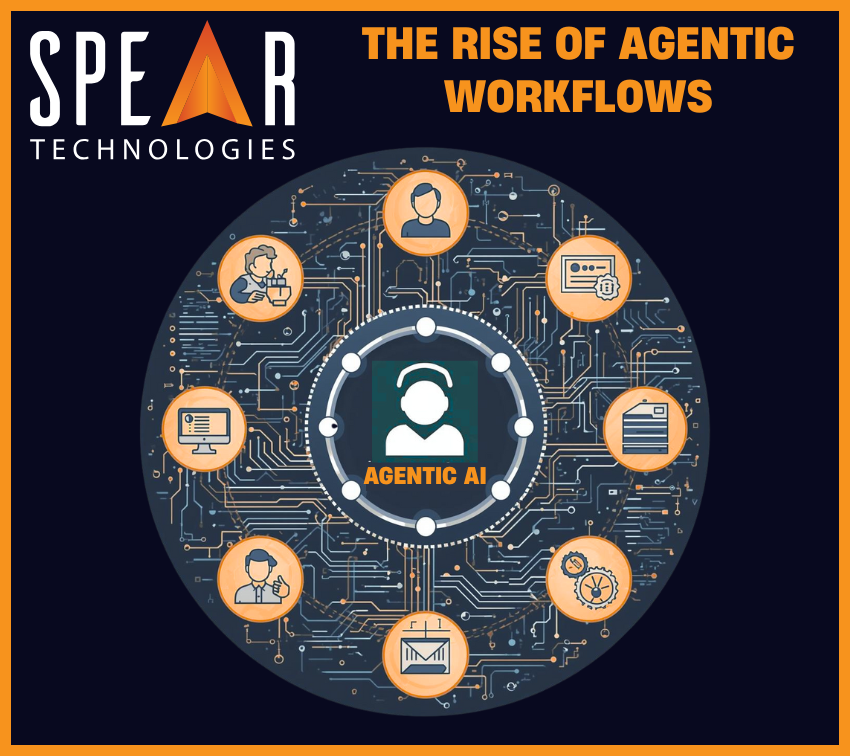
This evolution is giving rise to agentic AI workflows, systems that can understand goals, coordinate multiple actions, adapt to changing conditions, and escalate decisions when human judgment is required. For insurance organizations, this marks a critical transition toward autonomous insurance processes that are orchestrated, governed, and outcome-driven.
From Task Automation to Agentic Workflows
Traditional automation focuses on “what” to do:
- Extract data from a document
- Route a claim to a queue
- Trigger a notification
Agentic AI workflows focus on “how” and “when” work gets done across an end-to-end process.
An agentic workflow can:
- Interpret context across systems
- Decide the next best action
- Coordinate multiple AI models and business rules
- Monitor outcomes and adjust in real time
Rather than being hard-coded, these workflows are goal-oriented.
For example:
“Resolve this claim quickly, accurately, and in compliance—while minimizing leakage and customer friction.”
The AI agent does not just complete one step. It manages the process.
What Makes an AI Workflow “Agentic”?
An agentic AI workflow in insurance typically includes four core capabilities:
1. Context Awareness
The AI understands data across claims, policy, billing, documents, prior loss history, and external sources, rather than acting on a single input.
2. Decision Autonomy
The system can determine what should happen next:
- Continue processing
- Request additional information
- Escalate to a human
- Trigger downstream actions
3. Orchestration Across Systems
Agentic workflows coordinate actions across:
- Claims management software
- Policy systems
- Document repositories
- Analytics and AI models
4. Human-in-the-Loop Governance
Autonomy does not mean lack of control. Agentic workflows are designed with:
- Approval thresholds
- Confidence scoring
- Auditability and explainability
This balance is critical for regulated industries like insurance.
Making Agentic AI Real: Practical Insurance Workflows
To make agentic AI tangible, it helps to look at real insurance processes, not theoretical models.
Agentic Workflow Example: Claims Intake to Resolution
Traditional Approach
- FNOL submitted
- Claim routed based on static rules
- Adjuster manually reviews documents
- Multiple handoffs and delays
Agentic AI Workflow
- FNOL is submitted via portal, email, or phone
- AI agent evaluates claim complexity, coverage, and risk indicators
- Documents are classified and validated automatically
- The agent determines:
- Straight-through processing
- Adjuster assignment
- Fraud review escalation
- The workflow adapts as new information arrives
- Human oversight is triggered only when thresholds are exceeded
The result:
- Faster cycle times
- Reduced adjuster workload
- More consistent outcomes
This is not automation, it is process management by AI.
Agentic Workflow Example: Exception Management in Operations
Insurance operations teams spend a disproportionate amount of time handling exceptions.
Agentic AI workflows can:
- Monitor operational KPIs in real time
- Detect bottlenecks or anomalies
- Automatically rebalance workloads
- Recommend corrective actions to supervisors
Instead of reacting after performance declines, operations leaders gain continuous, AI-driven process optimization.
Why Agentic Workflows Matter to Insurance Executives
For executives, the value of agentic AI workflows is not novelty, it is control and scalability.
Operations Leaders
- Reduced dependency on manual coordination
- More predictable service levels
- Scalable processes without linear staffing growth
Claims Executives
- Faster resolutions with fewer touchpoints
- Adjusters focused on high-value decisions
- Improved customer satisfaction
IT Leaders
- Fewer brittle integrations
- Orchestrated AI embedded within core systems
- Governance and compliance built into workflows
Agentic workflows turn AI from a toolset into an operating layer.
Agentic AI and Autonomous Insurance Processes
The long-term trajectory is clear:
Insurance processes are becoming increasingly autonomous.
However, autonomy in insurance does not mean:
- Black-box decisioning
- Unchecked automation
- Removal of human accountability
Instead, autonomous insurance processes are:
- Policy-aware
- Exception-driven
- Governed by design
Agentic AI workflows enable insurers to automate what should be automated, while ensuring humans remain in control of what matters most.
The Platform Imperative
Agentic workflows cannot function effectively inside disconnected point solutions.
They require:
- Unified data access
- Embedded AI capabilities
- Workflow orchestration across claims, policy, and billing
- Low-code flexibility for business users
This is why insurers are shifting away from fragmented tools toward AI-enabled core platforms that support orchestration natively.
Looking Ahead: From Workflow Automation to Workflow Intelligence
Agentic AI represents the next phase of insurance transformation.
The question for insurers is no longer:
“Can AI automate this task?”
It is now:
“Can AI manage this process end to end, responsibly, transparently, and at scale?”
Those who embrace agentic AI workflows will move faster, operate smarter, and adapt more easily as the industry continues to evolve.
Closing Thought
Agentic AI is not replacing insurance professionals.
It is learning how insurance works so your people can focus on what only humans can do.
Solutions like SpearClaims™ and SpearPolicy™, delivered through SpearSuite™, reflect this shift by embedding Predictive AI, Generative AI, and Agentic AI directly into core insurance workflows. Rather than layering AI onto existing processes, these capabilities are designed to orchestrate claims and policy operations end to end, coordinating decisions, adapting to changing conditions, and escalating to humans when judgment is required. All of this is delivered through an Accessible AI framework that emphasizes transparency, explainability, and control.
For insurance leaders evaluating technology investments today, the strategic question is no longer whether to adopt AI. It is whether your core systems are designed to support agentic workflows as AI evolves—or whether they will remain limited to isolated automation.
As organizations assess the best claims management software and best P&C core systems for 2026 and beyond, the focus should move beyond surface-level AI features and toward platforms built for intelligent orchestration, governed autonomy, and operational resilience.
Schedule a demo of SpearClaims™, SpearPolicy™, and SpearSuite™ to see how built-in, Accessible AI powered by Predictive, Generative, and Agentic AI can help your team work smarter, move faster, and stay in control as the insurance industry evolves.