Why AI Orchestration Is Becoming the New Operating Model for Insurance
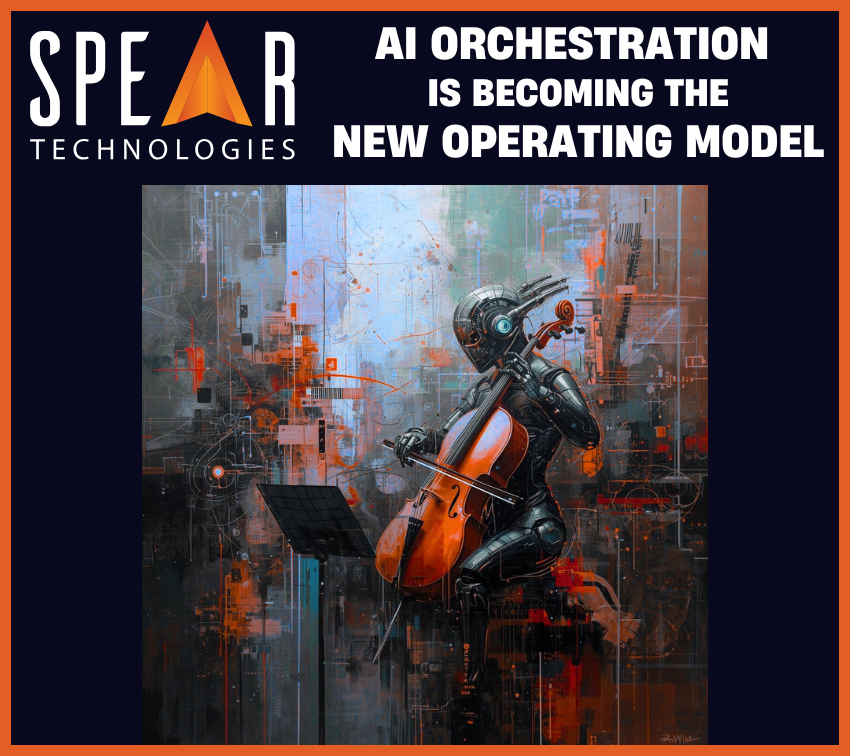
As organizations begin to navigate 2026, Artificial Intelligence is no longer evaluated by novelty or isolated use cases. The conversation has shifted toward how AI operates inside the enterprise, how it supports decision-making at scale, and how multiple AI models work together responsibly across core systems.
This shift is giving rise to a new insurance operating model: AI orchestration.
Rather than treating AI as a collection of tools, leading insurers are beginning to view AI as an operational layer, one that coordinates workflows, decisions, and actions across claims, policy, billing, finance, and customer engagement.
At the center of this evolution is Agentic AI, but the impact goes far beyond a single technology. AI orchestration represents a structural change in how insurance organizations function.
From AI Capabilities to AI Orchestration
Early AI adoption in insurance focused on point solutions:
- Predictive models for severity or fraud
- Generative AI for summarization and document drafting
- Automation for repetitive, rules-based tasks
These capabilities delivered value, but largely in isolation.
AI orchestration marks the transition from task-level intelligence to enterprise-level coordination. Instead of responding to individual prompts or producing standalone insights, orchestrated AI systems:
- Operate toward defined business goals
- Decide how and when actions should occur
- Coordinate multiple AI models and systems
- Monitor outcomes and adapt behavior over time
This is why AI orchestration should be understood as an operating model, not a feature.
What Is AI Orchestration in Insurance?
AI orchestration refers to the ability to coordinate decision-making and execution across workflows using multiple AI models, governed by business rules and operational constraints.
At the core of AI orchestration is Agentic AI, which functions as the control layer:
- Predictive AI generates forecasts and risk signals
- Generative AI creates summaries, communications, and documentation
- NLP and expert systems extract meaning and enforce rules
- Agentic AI determines what should happen next—and initiates action
Rather than replacing existing AI models, Agentic AI connects them, ensuring insights translate into coordinated outcomes.
This distinction is critical for executives evaluating the future of their insurance operating model.
AI Orchestration vs. Automation and Robotics
A common question from leadership teams is:
“How is AI orchestration different from automation or robotics?”
At a high level:
- Agentic AI is the brain
- Robotics and automation are the hands
Automation and robotic systems execute predefined tasks based on fixed scripts. They excel at consistency and speed, but only within narrow, well-defined boundaries.
AI orchestration, enabled by Agentic AI, introduces:
- Goal-driven decision-making
- Multi-step reasoning across workflows
- Coordination between systems and teams
- Continuous monitoring and adjustment
Automation executes tasks. AI orchestration decides which tasks should occur, in what order, and under what conditions.
Why AI Orchestration Matters to Insurance Leaders
Insurance operations are inherently complex. Claims, policy, billing, finance, and compliance functions are deeply interconnected, governed by regulations, service-level agreements, and financial controls.
AI orchestration is uniquely suited to this environment.
Claims and Policy Operations
Orchestrated AI can prioritize workloads, coordinate reviews, and trigger downstream actions based on real-time risk signals—rather than relying on static queues or manual intervention.
Compliance and Exception Management
Instead of reacting to missed deadlines or audit findings, AI orchestration continuously monitors timelines, thresholds, and exceptions, initiating intervention before issues escalate.
Cross-System Coordination
Claims do not exist in isolation. AI orchestration aligns actions across claims, policy, billing, and finance systems to ensure consistency, accuracy, and accountability.
Proactive Decision Support
Rather than waiting for user input, orchestrated AI can initiate next-best actions, requesting documentation, escalating cases, or prompting review while maintaining governance and oversight.
This is where AI shifts from insight generation to operational execution with intent.
AI Orchestration Requires a Multi-Model Architecture
A key misconception is that orchestration replaces existing AI investments. It does not. AI orchestration depends on them.
In a modern insurance platform:
- Predictive AI assesses severity, litigation risk, fraud, or churn
- Generative AI accelerates documentation and communication
- NLP and expert systems provide structure and compliance
- Agentic AI coordinates decisions and actions across workflows
This multi-model architecture is rapidly becoming a defining attribute of the best claims management software and best P&C core systems.
Why Architecture Matters More Than Ever
AI orchestration is only effective when it operates within the system of record. For orchestration to work responsibly, AI must have:
- Access to real-time, authoritative data
- Visibility into governed workflows
- Clear escalation paths and decision boundaries
- Auditability and explainability by design
This is why bolt-on AI approaches fall short. External orchestration tools introduce latency, fragmented context, and governance risk.
Embedded AI orchestration – built directly into claims management and policy administration systems ensures decisions remain transparent, controlled, and aligned with business objectives.
This is also where Accessible AI becomes critical. Business leaders, not just IT or data science teams, must be able to understand, configure, and oversee how AI-driven decisions unfold.
What AI Orchestration Means for the Insurance Operating Model
As insurers plan for 2026 and beyond, AI orchestration is emerging as a dividing line:
- Task automation vs. outcome orchestration
- Disconnected tools vs. coordinated systems
- Reactive workflows vs. proactive operations
Executives evaluating the future of their insurance operating model should be asking:
- Can our AI initiate action, not just respond?
- Can it coordinate across claims, policy, and finance?
- Is orchestration governed, explainable, and configurable?
- Do Predictive, Generative, and Agentic AI work together or in silos?
- Is AI embedded into core systems or layered on top?
Organizations that embrace AI orchestration responsibly gain:
- Faster operational response
- Stronger compliance and oversight
- Better resource utilization
- Improved claim, policy, and customer outcomes
Looking Ahead to 2026
AI orchestration represents the next evolution of AI-driven insurance, not by replacing human judgment, but by amplifying it through intelligent coordination across systems, teams, and decisions.
As the industry moves forward, success will not come from adopting the newest AI label or deploying isolated tools. It will come from orchestrating the right AI models together, embedding them directly into core systems, and ensuring they operate within clear governance, transparency, and business control.
In this context, AI orchestration is not simply another technology trend. It is becoming the foundation of the next-generation insurance operating model designed for complexity, scale, and accountability.
Solutions such as SpearClaims™ and SpearPolicy™, delivered through SpearSuite™, reflect this shift by embedding Predictive AI, Generative AI, and Agentic AI directly into claims management and policy administration workflows. This approach enables insurers to move beyond task automation toward coordinated, goal-driven operations while maintaining human oversight through an Accessible AI framework that prioritizes explainability and control.
For insurers evaluating technology investments today, the strategic question is no longer whether to adopt AI, but which core systems are designed to evolve as AI advances.
As organizations assess the best claims management software and best P&C core systems for 2026 and beyond, the focus should move past surface-level AI features and toward platforms built for long-term intelligence, orchestration, and operational resilience.
If your organization is assessing the Best Claims Management Software or Best P&C Core Systems for 2026 and beyond, now is the time to look beyond surface-level AI features and focus on platforms built for long-term intelligence.
Schedule a demo of SpearClaims™, SpearPolicy™, and SpearSuite™ to see how built-in, Accessible AI powered by Predictive, Generative, and Agentic AI can help your team work smarter, move faster, and stay in control as the insurance industry evolves.