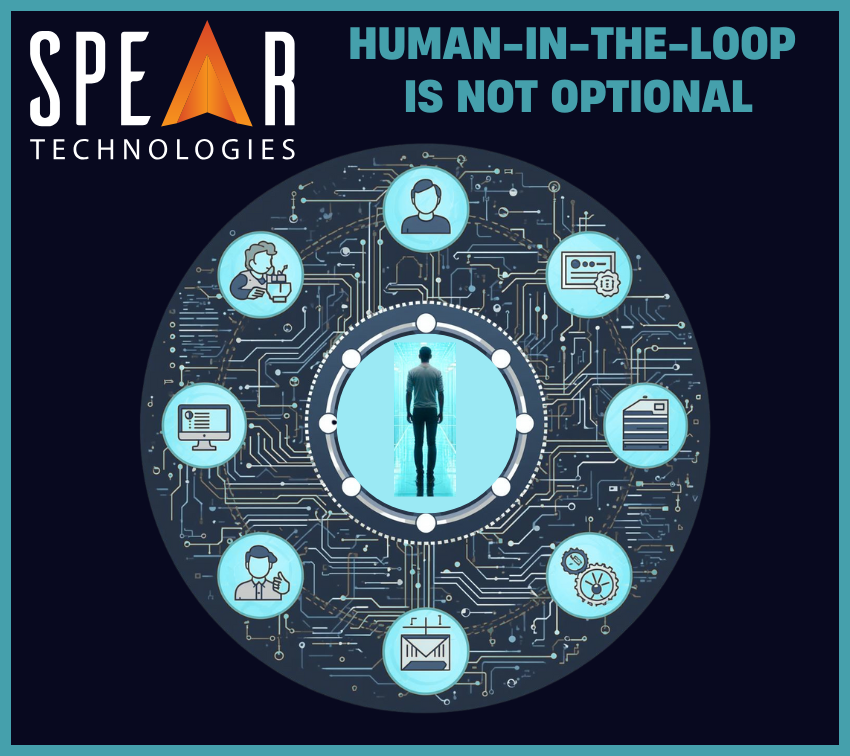
Human-in-the-Loop Is Not Optional: Designing Oversight into Agentic AI Systems
Why Human Oversight Is Becoming a Strategic Requirement in Insurance
Agentic AI is transforming how insurers operate. Unlike traditional automation, Agentic AI systems can reason, plan, and execute actions across workflows. In claims, underwriting, and risk operations, this capability is accelerating decisions and improving outcomes.
But with greater autonomy comes greater responsibility.
For insurance organizations, human-in-the-loop is no longer a technical preference. It is a governance requirement, a regulatory expectation, and a trust imperative. Without intentional human oversight, even the most advanced Artificial Intelligence for Insurance can create operational, legal, and reputational risk.
This article explores why human-in-the-loop must be designed into Agentic AI systems and how insurers can build governance frameworks that balance innovation with control.
From Automation to Autonomy: Why Agentic AI Changes the Risk Equation
Traditional claims automation software follows predefined rules. Predictive AI models generate recommendations based on historical data. Generative AI produces insights, summaries, and interactions.
Agentic AI goes further. It can orchestrate multiple AI models, initiate actions, and adapt workflows across systems such as claims management software, policy administration platforms, and risk analytics tools.
This shift changes the nature of risk.
When AI systems influence or execute decisions, insurers must answer critical questions:
- Who is accountable for AI-driven decisions?
- How are errors detected and corrected?
- How are regulatory expectations met?
- How is fairness, transparency, and explainability ensured?
For compliance, risk, and claims leaders, these questions are not theoretical. They are becoming central to AI governance in insurance.
Human-in-the-Loop as a Core Principle of AI Governance in Insurance
Human-in-the-loop refers to embedding human oversight into AI workflows at critical decision points. In insurance, this means that AI-driven outputs are reviewed, validated, or overridden by qualified professionals when appropriate.
Human-in-the-loop is essential for three reasons.
1) Regulatory and Compliance Expectations
Global regulators are increasingly focused on AI governance. Insurance regulators expect organizations to demonstrate:
- Explainability of AI decisions
- Accountability for outcomes
- Controls over automated decision-making
- Documentation of model behavior and oversight processes
Without human-in-the-loop controls, insurers may struggle to meet emerging regulatory requirements related to AI governance in insurance.
2) Risk Management and Model Accountability
Agentic AI systems can amplify both efficiency and error.
Human oversight helps insurers:
- Detect model drift and bias
- Validate outputs from Predictive AI and Generative AI
- Manage exceptions in claims and risk workflows
- Ensure alignment with underwriting and claims policies
This is particularly critical in Risk Assessment For Insurance, where AI-driven insights influence pricing, coverage decisions, and claims outcomes.
3) Trust Across the Organization and with Customers
Trust is foundational in insurance.
Claims professionals must trust AI recommendations in the Claims Management System. Compliance teams must trust governance controls. Customers must trust that decisions are fair and explainable.
Human-in-the-loop reinforces trust by ensuring that AI augments expertise rather than replacing accountability.
Designing Human-in-the-Loop into Agentic AI Systems
Human oversight cannot be added as an afterthought. It must be architected into insurance software solutions from the start.
Identify High-Risk Decision Points
Not all AI decisions require human review. Insurers should focus on high-impact scenarios such as:
- Claim denials or high-severity claims in the Claims Management Solution
- Fraud detection outcomes in Claims automation software
- Underwriting decisions driven by Predictive AI
- Customer communications generated by Generative AI
- Risk scoring in enterprise risk workflows
These are the points where human validation is essential.
Define Clear Roles and Accountability
Effective human-in-the-loop frameworks clarify:
- Who reviews AI decisions
- When human intervention is required
- How overrides are documented
- How feedback improves models
This clarity is critical for organizations using the Best Claims Management Software or Best Claims Systems to scale AI-driven workflows responsibly.
Build Explainability into AI Outputs
Human oversight is only possible when AI decisions are interpretable.
Insurance organizations should require that Agentic AI systems provide:
- Rationale for decisions
- Confidence scores or risk indicators
- Traceability across data sources and models
This is a key differentiator for the Best Claims Management Systems and modern Claims Management System platforms.
Integrate Continuous Monitoring and Feedback
Human-in-the-loop is not a one-time control. It is an ongoing process.
Leading insurers integrate monitoring mechanisms that:
- Track model performance and bias
- Capture human feedback
- Adjust workflows based on operational outcomes
This approach aligns with Accessible AI for Future-Proofing Risk Management, where AI systems evolve under structured human governance.
Accessible AI: Making Governance Practical, Not Theoretical
One of the biggest challenges in AI governance is complexity.
Many insurers deploy disconnected AI tools that are difficult to govern, explain, and control. This fragmentation undermines oversight and increases risk.
Accessible AI changes this dynamic.
Accessible AI integrates Predictive AI, Generative AI, and Agentic AI within core insurance platforms such as claims management software and enterprise risk systems. By embedding governance capabilities directly into workflows, Accessible AI makes human-in-the-loop practical and scalable.
For insurers seeking the Best Claims Software and modern Insurance software solutions, governance is no longer separate from innovation. It is part of the architecture.
Human-in-the-Loop as a Competitive Advantage
Some insurers view human oversight as a constraint on innovation. In reality, it is a strategic enabler.
Organizations that design human-in-the-loop into Agentic AI systems can:
- Accelerate AI adoption with confidence
- Reduce regulatory and operational risk
- Improve decision quality in claims and risk management
- Strengthen trust with regulators, employees, and customers
In a market where AI capabilities are rapidly commoditized, governance excellence will differentiate the leaders from the laggards.
The Future of Agentic AI in Insurance Depends on Human Oversight
Agentic AI will redefine how insurers operate. But autonomy without accountability is not sustainable.
Human-in-the-loop is not optional. It is the foundation of responsible Artificial Intelligence for Insurance.
As insurers adopt Agentic AI across claims, underwriting, and risk operations, the question is no longer whether to implement human oversight. The question is how effectively it is designed into the Claims Management System, risk frameworks, and enterprise governance models.
Accessible AI provides a path forward. By combining advanced AI capabilities with built-in governance, insurers can unlock the full potential of Agentic AI while maintaining control, compliance, and trust.
From Oversight to Advantage: Turning Human-in-the-Loop into a Strategic Capability
As Agentic AI becomes embedded in claims, underwriting, and risk operations, insurers must move beyond experimentation and toward intentional design. Human-in-the-loop is not simply a safeguard. It is a strategic capability that determines whether Artificial Intelligence for Insurance delivers sustainable value or introduces unacceptable risk.
Organizations that invest early in governance, explainability, and human oversight will be better positioned to scale AI responsibly. They will strengthen compliance, improve decision quality, and build lasting trust across claims teams, risk leaders, and regulators.
Accessible AI makes this possible. By unifying Predictive AI, Generative AI, and Agentic AI within modern insurance software solutions, insurers can operationalize human-in-the-loop across the Claims Management System and enterprise risk workflows without slowing innovation.
Closing Thought
If your organization is exploring Agentic AI or expanding claims automation software, now is the time to design governance into your architecture.
Discover how Spear Technologies delivers Accessible AI built for control, transparency, and scale across the Best Claims Management Software and enterprise risk platforms.
Schedule a demo to learn how SpearClaims™ and SpearSuite™ can help you implement human-in-the-loop frameworks that future-proof your Claims Management Solution and strengthen Risk Assessment For Insurance.